
While many explore erectile dysfunction treatments or cellulite reduction options, PRP therapy stands out as a regenerative approach for muscle repair. Platelet-rich plasma, or PRP therapy, harnesses your own growth factors to accelerate healing after strains, tears, or surgery. In this article, you’ll learn what PRP is, how it speeds muscle recovery, who makes a good candidate, and how to prepare for and care for your treatment. Ready to jump-start your post-injury journey? Let’s dive in.
What is PRP therapy
PRP stands for platelet-rich plasma, which is made from a small sample of your own blood. During the process, your provider spins that sample in a centrifuge to concentrate platelets, the cells that carry growth factors. Once injected into the injury site, those platelets signal your body to heal faster. It’s a fully autologous (your own) treatment, so there’s minimal risk of allergic reaction. Sounds simple enough?
How PRP speeds muscle healing
Platelet action at injury site
After injection, platelets release growth factors like PDGF, TGF-beta, and VEGF. Those factors recruit stem cells and immune cells to the injury site, which reduces inflammation and kick-starts repair. You get a head start on the natural healing cascade, which can otherwise take days or weeks to ramp up.
Collagen and tissue regeneration
Growth factors in PRP also promote fibroblast activity, boosting collagen synthesis. More collagen means stronger, more resilient muscle fibers as they rebuild. Think of it like giving your body a blueprint and the raw materials it needs for a faster rebuild.
Who can benefit from PRP therapy
PRP therapy is ideal for anyone with muscle strains, partial tears, or chronic tendon issues. If you’ve tried rest, ice, and physical therapy but still feel sore or stiff, PRP might be the next step. That said, PRP isn’t a magic bullet. Results vary based on the severity of your injury and overall health. Your provider will review your medical history to ensure PRP is safe for you. If you have a bleeding disorder or take blood-thinning medications, you may need to discuss other options.
Candidate criteria
- Acute muscle strains or partial tears older than 3–4 weeks
- Chronic tendinopathy, like tennis elbow or Achilles tendinopathy
- Post-surgical rehab when approved by your surgeon
- Healthy individuals without active infections or blood disorders
What to expect during PRP treatment
Consultation and evaluation
You’ll start with a one-on-one consultation. Your provider will examine the injury, review any imaging, and discuss realistic outcomes. They’ll explain risks, benefits, and answer your questions so you know exactly what’s ahead.
Injection procedure overview
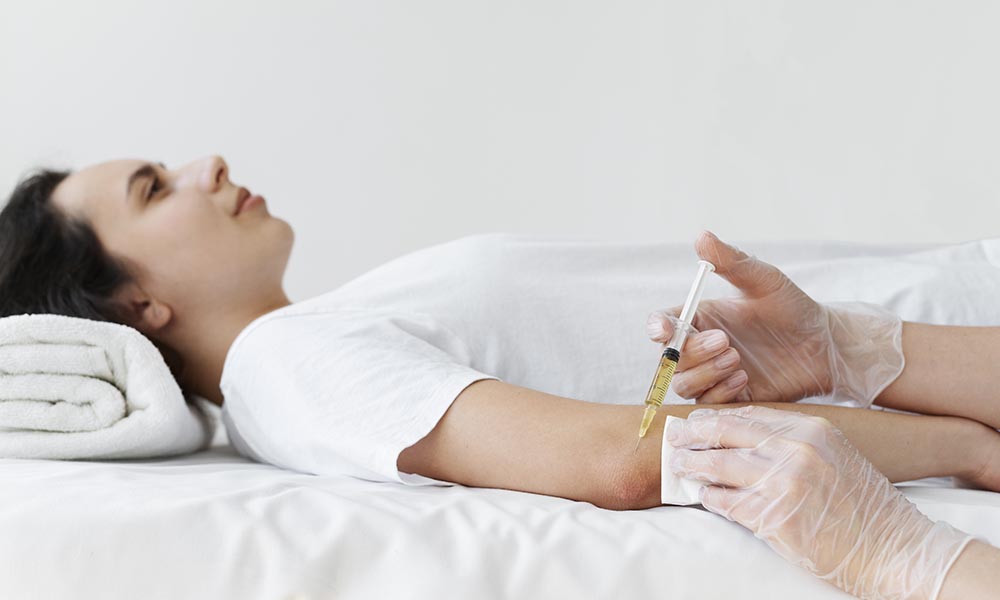
On treatment day, you’ll sit comfortably as your provider draws about two tablespoons of blood. After centrifugation, they’ll clean the injection site and apply numbing cream or local anesthetic. The final PRP shot takes just a few minutes. Many patients describe a brief pinch or mild pressure.
Post-injection sensations
- Mild soreness or achiness for a few days
- Slight bruising or swelling around the injection site
- Temporary stiffness that usually improves within 48–72 hours
Preparing for PRP and post-care
Before your session
- Avoid anti-inflammatory drugs (NSAIDs) for one week before treatment
- Stay hydrated and eat a light meal at least two hours beforehand
- Wear loose clothing to access the injection area easily
Aftercare tips
- Rest the treated muscle for 24–48 hours, avoid heavy lifting
- Apply ice packs for 10–15 minutes every few hours to reduce swelling
- Follow your provider’s rehab plan, including gentle stretching and physical therapy
- Avoid NSAIDs for another week or as directed to let growth factors do their work
Combining PRP with other regenerative treatments
PRP therapy often pairs well with regenerative modalities like stem cell injections or low-level laser therapy. Combining treatments can amplify tissue repair and functional recovery. Talk to your provider about options such as micro-needling for skin or hyaluronic acid injections for joints. For a deeper look at its advantages, see our guide to prp therapy benefits.
Conclusion: take the next step
PRP therapy offers a minimally invasive way to speed muscle recovery by using your body’s own healing power. If you’re struggling with a stubborn injury, talk to our medspa team to see if PRP is right for you.
Schedule your PRP therapy session by calling our clinic or booking online. Your muscles will thank you.
Frequently asked questions
How long does it take to see results from PRP therapy?\
Most patients notice reduced soreness within one to two weeks, with continued improvement over two to three months as new tissue forms.
Is PRP therapy painful?\
You may feel a brief pinch during injection and mild discomfort afterward, but local anesthetic and numbing cream make the process tolerable.
How many PRP sessions will I need?\
Many injuries respond well to a single session. In some cases, providers recommend two to three treatments spaced four to six weeks apart for optimal results.
Are there any side effects or risks with PRP injections?\
Because PRP uses your own blood, allergic reactions are rare. You might experience mild swelling, bruising, or temporary stiffness at the injection site.
Can I combine PRP with physical therapy?\
Absolutely yes. In fact, following a tailored rehab plan after PRP injections can enhance healing and help you regain strength more efficiently.